5 Signs Every Wedding Needs

Essential Wedding Signage to Complete Your Big Day
When you think about wedding planning, signs might not be the first thing that comes to mind. But here's the truth: wedding signs are some of the hardest-working details at your celebration. They guide your guests, answer questions before they're asked, and add a layer of personalized style that makes your event feel cohesive and intentional. Whether you're planning an intimate backyard ceremony or a grand ballroom reception, the right signage helps everything run smoothly while looking absolutely beautiful.
Table of Contents
- Why Wedding Signs Matter
- Welcome Signs: The First Impression
- Seating Chart Signs: Guiding Your Guests
- Bar Signs: Showcasing Your Signature Drinks
- Table Signs: Directing the Little Details
- Sweetheart Table Signs: Highlighting the Newlyweds
- Choosing the Right Material and Style
- Tips for Coordinating Your Wedding Signage
- Frequently Asked Questions
Why Wedding Signs Matter
Think of wedding signs as your silent event coordinators. While you're busy enjoying your first dance or greeting relatives you haven't seen in years, your signage is working behind the scenes to keep guests informed and comfortable. Signs every wedding needs serve both practical and aesthetic purposes, making them one of the smartest investments in your décor budget.
From a functional standpoint, wedding signage eliminates confusion. Guests immediately know where to go, what to do, and what's available. No one has to wander around looking for the gift table or wonder if there's a signature cocktail they should try. This kind of clarity makes everyone feel more relaxed and allows your celebration to flow naturally.
But beyond function, custom wedding signs tell your story. They reflect your personality as a couple, coordinate with your overall design, and create those picture-perfect moments that look stunning in photos. Whether you choose modern acrylic wedding signs with clean lines or rustic wooden designs with hand-lettered details, your signage sets the visual tone for your entire event.
The key is striking the right balance. You want enough signs to be helpful without overwhelming your space. That's why understanding which signs are truly essential helps you make smart decisions about where to invest your time and budget.
Welcome Signs: The First Impression

Your wedding welcome signs are the first thing guests see when they arrive at your ceremony or reception. This makes them one of the most important pieces of wedding signage you'll choose. A beautiful welcome sign immediately sets the mood and lets guests know they're in the right place.
What Makes a Great Welcome Sign
The best welcome signs include your names and wedding date, along with a warm greeting. Some couples add a favorite quote, lyrics from their song, or a simple "Welcome to our wedding" message. The wording should feel authentic to you while remaining easy to read from a few feet away.
Design-wise, welcome signs come in countless styles. Portrait-oriented signs work beautifully on easels at ceremony entrances, while landscape formats can span wider spaces. Arched acrylic designs have become incredibly popular for their modern, elegant look, and they photograph beautifully in natural light.
Placement Strategies
Place your welcome sign where guests naturally enter your venue. For outdoor weddings, this might be at the start of a walkway or near the parking area. Indoor celebrations often feature welcome signs in the lobby or at the entrance to the ceremony space. Make sure the sign is stable and visible, even if there's a bit of wind or if your venue has multiple entry points.
Consider scale when choosing your welcome sign. A large venue can handle a bigger statement piece, while intimate settings call for something more proportional. The goal is to create that perfect first impression without blocking foot traffic or overwhelming the space.
Seating Chart Signs: Guiding Your Guests

If you've assigned seating for your reception (and we recommend you do), a seating chart is absolutely essential. Without one, guests mill around uncertainly, trying to figure out where they should sit. With a clear, well-designed seating chart, everyone finds their spot quickly and the reception can begin on time.
Design Approaches That Work
There are several effective ways to display seating assignments. Alphabetical listings by last name help guests find themselves quickly. Organized-by-table formats work well when you want guests to immediately see who they're sitting with. Some couples use individual table assignment cards arranged alphabetically on a display, which doubles as a beautiful décor moment.
Modern couples often choose arched acrylic seating chart displays with clean typography. These personalized wedding signs look sophisticated and photograph beautifully. The key is making sure names are large enough to read easily, even for guests who might need reading glasses.
Strategic Placement
Position your seating chart near the entrance to your reception space, but not so close that it creates a bottleneck. Guests should be able to approach, read their assignment, and move along without blocking others. If you're expecting a large crowd, consider having two identical seating charts on opposite sides of the entrance.
Make sure there's adequate lighting, especially for evening receptions. A beautifully designed seating chart doesn't help if guests can't read it. Some venues have spotlights you can aim at signage, or you can incorporate the chart into a well-lit area of your cocktail hour space.
Bar Signs: Showcasing Your Signature Drinks

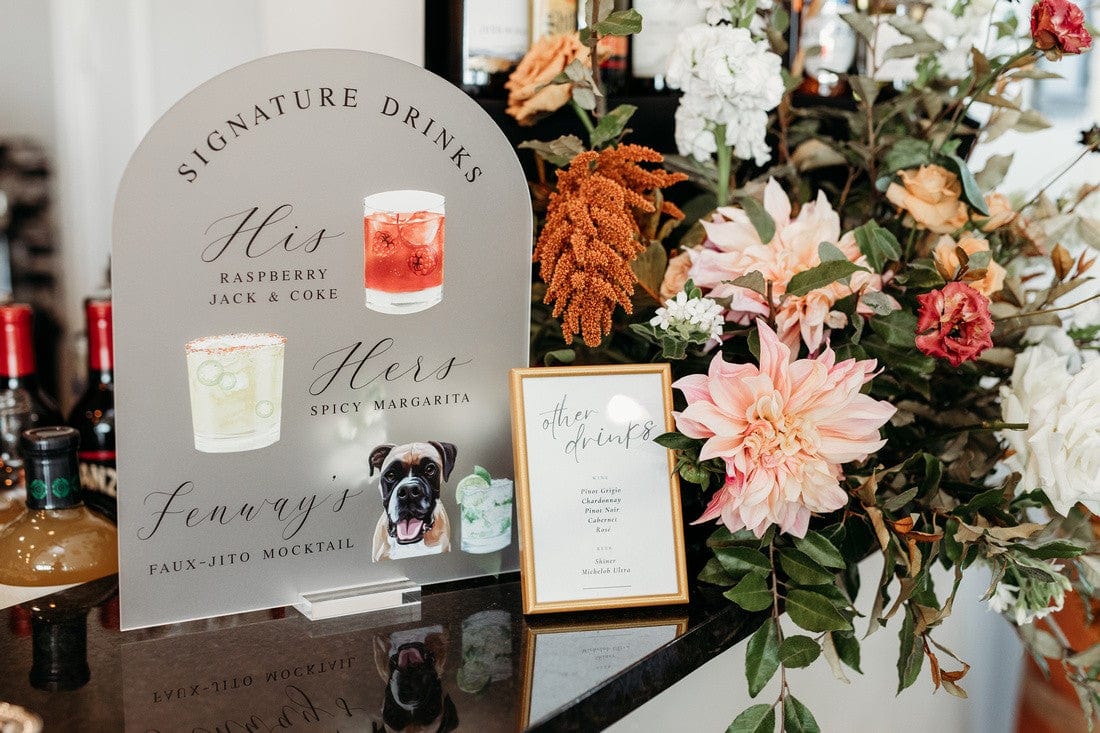
A well-designed bar sign does more than list what's available—it encourages guests to try something special and adds personality to your bar area. Bar menu signs have become one of the most popular types of wedding signage, and for good reason.
What to Include on Your Bar Sign
Start with the basics: your signature cocktails with brief descriptions. Include the spirits and main ingredients so guests know what they're ordering. If you're offering a full bar, list beer, wine, and spirits categories. Some couples add a fun story about why they chose their signature drinks—maybe the Moscow Mule reminds you of your first date, or the Paloma represents your engagement trip to Mexico.
Don't forget to list any non-alcoholic options. More guests than ever appreciate having creative mocktails available, and calling them out on your wedding bar signs makes everyone feel included.
Personalization Ideas
This is where wedding signs get really fun. Many couples add custom illustrations that reflect their interests or incorporate their pets into the bar sign design. Imagine "His" and "Hers" cocktails, each paired with a watercolor portrait of your dog or cat. These personal touches transform functional signage into meaningful décor that guests love.
The material matters here too. Acrylic wedding signs in frosted or clear finishes look elegant and modern behind a bar. They're easy to clean if they get splashed, and they catch the light beautifully. The investment in quality bar signage pays off in both function and style.
Table Signs: Directing the Little Details

Beyond your main signage pieces, you'll want several smaller table signs to help guests navigate different stations throughout your reception. These directional signs answer common questions before guests even think to ask them.
Essential Table Signs to Consider
A "Cards and Gifts" sign marks where guests should leave cards and presents. This seems obvious, but without a sign, gifts often end up scattered across different tables or tucked into corners. A designated, clearly marked spot keeps everything organized and secure.
If you're having a dessert bar, candy station, or late-night snack table, signs help guests understand what's available. "Love is Sweet, Take a Treat" has become a classic phrase for dessert displays, but you can personalize this to match your celebration's vibe.
Guest book signs encourage participation. A simple "Please Sign Our Guest Book" with an arrow or directional element helps ensure you collect messages from everyone attending. Some couples use these signs to explain alternative guest book options, like photo books or message-in-a-bottle displays.
Memorial table signs deserve special mention. "In Loving Memory" signs honor family members and friends who have passed away. These personalized wedding signs create a meaningful space for remembrance within your celebration.
Maintaining Visual Consistency
All your table signs should coordinate in style, even if they're different sizes. Using the same material, font family, and color palette across all your wedding signage creates a cohesive, professional look. This is where planning ahead with a full signage package makes sense—everything works together visually.
Sweetheart Table Signs: Highlighting the Newlyweds
Your sweetheart table deserves its own special signage. Whether you're doing a traditional sweetheart table for just the two of you or a head table with your wedding party, a beautiful sign helps identify this special space and creates a focal point for photos.
Design Ideas That Stand Out
Classic options include your new shared last name preceded by "Mr. & Mrs." or "The Newlyweds." Modern couples might opt for both first names in an elegant script. Some prefer romantic quotes or phrases like "Better Together" or "Happily Ever After."
The size and style of your sweetheart table sign should complement the table itself. A long rectangular table can handle a wider sign, while a small round sweetheart table might be better suited to a vertical or arched design. Consider signs that stand independently rather than lean, as they're less likely to tip during the reception.

Making It Personal
Your sweetheart table sign is a perfect place for extra personalization. Add meaningful details like your wedding date, a constellation map of your engagement night, or illustrations that represent your shared interests. This sign will be behind you in countless photos, so choose something you'll love looking back on for years to come.
Some couples incorporate their sweetheart sign into a larger tablescape, surrounding it with candles, flowers, or personal mementos. The key is ensuring the sign remains visible and doesn't get lost among other décor elements.
Choosing the Right Material and Style
The material you choose for your wedding signs impacts both their appearance and functionality. Understanding your options helps you make decisions that align with your wedding style and budget.
Acrylic: Modern and Elegant
Acrylic wedding signs have surged in popularity, and it's easy to see why. Clear acrylic creates an almost invisible floating effect with your text, while frosted acrylic offers a sophisticated, soft appearance. Both options photograph beautifully and work with virtually any wedding style from ultra-modern to romantic garden celebrations.
Arched acrylic designs add an extra design element that feels current and special. The material is durable, weather-resistant for outdoor weddings, and easy to transport. Many couples choose acrylic for larger investment pieces like welcome signs and seating charts, then coordinate with matching smaller signs for a cohesive look.
Wood: Rustic Warmth
Wooden signs bring warmth and texture to rustic, barn, or outdoor weddings. They can be painted, stained, or left natural depending on your aesthetic. Wood signs feel grounded and substantial—perfect for outdoor venues where lighter materials might blow around.
The trade-off is that wood is heavier and can be more challenging to transport. It's also more vulnerable to weather, so if you're planning an outdoor wedding, make sure wooden signs are sealed properly or have a backup plan if it rains.
Printed Signs: Budget-Friendly Options
Foam board or printed signs mounted on easels offer a cost-effective solution when you need multiple signs. They're lightweight, easy to customize, and can look quite polished with professional printing. These work especially well for signs you might only need once, like directional signage to ceremony locations or parking instructions.
The key with printed signs is investing in quality printing and mounting. A beautifully designed sign on flimsy material will look exactly that—flimsy. If you go this route, choose thick foam board or mount prints on backing that won't bend or warp.
Tips for Coordinating Your Wedding Signage
Creating a cohesive signage package is about more than just ordering a bunch of custom wedding signs. It's about thinking strategically about how all these elements work together to guide your guests and enhance your wedding aesthetic.
Start with a Signage Checklist
Before ordering anything, list every sign you'll need. Walk through your wedding timeline mentally—from ceremony arrival through send-off—and note every moment where signage would help. This prevents last-minute scrambling and ensures you don't miss something important.
Your complete signage package might include welcome signs, ceremony program signs, cocktail hour directional signs, seating charts, bar menus, table numbers, and various station signs. Having this list early helps you budget appropriately and work with designers who can create coordinated pieces.
Maintain Design Consistency
Choose one or two fonts maximum and use them across all your wedding signs. Select a color palette that complements your wedding colors without necessarily matching them exactly. If you're using acrylic signs for your main pieces, consider whether smaller signs should also be acrylic or if a complementary material makes sense.
The goal is intentional variation, not random assortment. All your signage should feel like it belongs to the same family, even if individual pieces serve different purposes.
Consider Your Timeline
Order custom wedding signs earlier than you think you need to. Quality signage, especially personalized pieces from small businesses, requires production time. Aim to have all signs completed at least two to three weeks before your wedding. This buffer allows time for any corrections and means you can pack signage with your other décor without stress.
Plan for Setup and Breakdown
Think about how each sign will be displayed. Do you need easels? Stands? Hooks or clips? Make sure you have the necessary hardware and that someone on your setup team knows where each sign should go. Consider creating a simple diagram showing sign placement so your wedding coordinator or venue staff can execute your vision.
Don't forget breakdown. Designate someone to collect all signs at the end of the night, especially custom pieces you'll want to keep as mementos. These items are easy to leave behind in the post-wedding excitement.
Frequently Asked Questions
What signs do you need for a wedding?
At minimum, most weddings benefit from a welcome sign, seating chart (if you have assigned seating), and a bar menu sign. Beyond these essentials, consider table signs for specific stations like cards and gifts, dessert displays, and guest books. The exact number varies based on your venue layout and how much guidance you want to provide guests. A typical wedding might use anywhere from five to fifteen signs throughout the ceremony and reception.
Where should you place wedding signs?
Place welcome signs at natural entry points where guests first arrive. Position seating charts near the entrance to your reception space, but not so close that they create traffic jams. Bar signs belong at or behind the bar where guests order drinks. Table signs should be placed directly on or very near the tables they're identifying. The key is thinking about guest flow—put signs where people naturally look for information, not where they have to hunt for them.
Do I really need a seating chart at my wedding?
If you have assigned seating, absolutely yes. A seating chart eliminates confusion and helps your reception start smoothly. Without one, guests waste time wandering around looking for their names on place cards, and you might have awkward moments where people accidentally take the wrong seats. Even for smaller weddings, a simple seating chart makes everything run more smoothly. If you're having open seating, you don't need a seating chart, but you might still want a sign indicating that seating is open to prevent confusion.
What should a wedding welcome sign say?
Most wedding welcome signs include the couple's names and wedding date at minimum. Common wording includes "Welcome to the Wedding of [Names]" or simply "Welcome to Our Wedding." Some couples add meaningful quotes, lyrics, or phrases that reflect their relationship. Keep the text clear and easy to read—this isn't the place for tiny fonts or overly complicated wording. Your welcome sign should be legible from several feet away so guests can read it as they approach.
How many signs are too many for a wedding?
You've crossed into "too many" territory when signs start feeling cluttered or redundant. If you find yourself creating signs that explain other signs, step back and simplify. A good rule of thumb is that every sign should serve a clear purpose—either providing necessary information or marking an important location. Quality matters more than quantity. Five beautifully designed, strategically placed signs will serve you better than twenty mediocre ones scattered everywhere.
What size should wedding signs be?
Sign size depends on viewing distance and purpose. Welcome signs are typically 18x24 inches or larger since guests see them from farther away. Seating charts need enough space to list all guests clearly—24x36 inches works for most weddings, though larger guest lists might require bigger signs. Bar menu signs can be 16x20 or 18x24 inches. Small table signs might be just 5x7 or 8x10 inches. Consider where each sign will be placed and how far away guests will be when reading it. You can always ask your signage provider for size recommendations based on your specific needs.
Can I DIY my wedding signs?
You absolutely can DIY wedding signs if you have the time, design skills, and tools. Printed signs are the most DIY-friendly option—you can design them digitally and have them professionally printed, then mount them on foam board or in frames. Wooden signs require woodworking tools and painting skills. Acrylic signs are harder to DIY since they require special equipment for cutting and printing. The trade-off with DIY is time versus cost. Professional custom signs save hours of work and ensure consistent quality, which many couples find worth the investment.
When should I order my wedding signs?
Order custom wedding signs at least six to eight weeks before your wedding date. This gives designers and makers time to create your pieces without rushing, and allows time for revisions if needed. If you're ordering during peak wedding season (May through October), add extra buffer time. Rush orders are sometimes possible but often come with additional fees. The earlier you order, the more relaxed you'll feel knowing this detail is handled.
Conclusion
Wedding signs might seem like small details, but they work remarkably hard throughout your celebration. The right signage guides your guests, answers their questions, and adds layers of personality and polish to your décor. By focusing on these five essential signs—welcome, seating chart, bar menu, table directional, and sweetheart table—you create a foundation that makes your wedding run smoothly while looking beautiful.
The beauty of modern wedding signage is how many options you have for personalization. Whether you choose elegant acrylic designs, rustic wooden pieces, or contemporary printed signs, you can create something that feels authentically you. Invest in quality pieces for the signs that matter most, coordinate everything thoughtfully, and your wedding will feel cohesive, welcoming, and unforgettable.
Related Blog Posts
Do You Really Need Custom Cups at Your Wedding? Yes, Here's Why
Monogrammed Cups for Weddings: A Timeless Custom Touch
Wedding Cups 101: Styles, Sizes & Customization Tips for Brides
How to Choose the Best Custom Cups for Your Bridal Shower
5 Elegant Frosted Cups to Elevate Your Wedding Aesthetic
When Do You Have a Bridal Shower?
Who Do You Invite to a Bridal Shower?
Do You Have to Have a Bridal Shower?
At Rubi and Lib, we specialize in helping you celebrate life's most memorable moments with personalized wedding and party decor designed to reflect your unique style. From custom cocktail napkins and frosted plastic cups to bar signs and party favors, our curated collections are created to elevate your celebration and leave a lasting impression on your guests.
Whether you're planning a wedding, bridal shower, bachelorette party, baby shower, or birthday bash, our products add a thoughtful, stylish touch that turns an ordinary gathering into an unforgettable event. Many of our designs feature custom illustrations—including pet portraits—so your decor feels as one-of-a-kind as your story.
As a women-owned small business, we're passionate about making the ordering process seamless and enjoyable. Every item is crafted with care and attention to detail, and most of our products are made in the USA. We believe celebrations should feel personal, joyful, and stress-free—that's why we're here to help you create meaningful moments, one custom detail at a time.
Explore our best sellers, discover customer favorites, or reach out for something truly unique. At Rubi and Lib, your celebration is our inspiration.

Written by Bethany Wysolmerski