Personalized Wedding Napkin Ideas: Designs, Tips, and Inspiration
A stack of crisp napkins at each place setting quietly became the detail guests remembered most: a delicate illustrated paw print paired with the couple’s initials, printed in metallic rose gold. That simple touch — a personalized wedding napkin — helped the celebration feel intimate, intentional, and unmistakably theirs.
Why Couples Choose a Personalized Wedding Napkin
Personalized wedding napkins do more than catch spills. They act as small canvases where personality, theme, and practical hospitality meet. Couples often pick customized napkins because they:
- Create a cohesive look — Napkins can tie table decor, invitations, and signage into one visual story.
- Offer memorable keepsakes — Cloth or high-quality paper napkins with a monogram or illustration become something guests actually save.
- Provide friendly branding — A wedding's visual identity gets a subtle, repeatable touch across every table.
- Deliver thoughtful guest experience — Personalized napkins add a feeling of hospitality and care, especially in cocktail hours or dessert stations.
For couples who want small, impactful details, a personalized wedding napkin is an affordable, versatile option.
Types of Napkins and When to Use Them
Before designing, it helps to know the napkin types and sizes couples typically consider:
- Cocktail napkin — Usually 5" x 5" (folded). Ideal for hors d'oeuvres, bars, and casual mingling settings.
- Lunch/Guest napkin — Around 6.5" x 6.5" folded. Good for buffets or light plated meals.
- Dinner napkin — 12" x 12" or larger (unfolded). Works for formal sit-down dinners.
- Cloth napkin — Typically 16"–20". Durable, keepsake-worthy, and great for monograms or embroidery.
- Serviette/Decorative band — Napkin wraps, rings, or belly bands that complement the printed napkin.
Choosing the right type depends on the event format. Cocktail napkins are perfect for high-traffic areas, while cloth napkins make stronger keepsakes for seated dinners.
Design Elements That Make Personalized Napkins Stand Out
Thoughtful design helps a personalized wedding napkin feel intentional rather than afterthought. Key elements to consider include:
Monograms, Names, and Dates
Monograms are classic for a reason — they're elegant, legible, and scale well on both cocktail and dinner napkins. Couples often opt for:
- Interlocking initials (J & M)
- Full names and wedding date in a secondary line
- Short phrases like “Cheers” or “Let’s Celebrate” paired with initials
Illustrations and Icons
Illustrations — from floral wreaths to skyline silhouettes — personalize napkins beyond typography. Unique motifs can include:
- Venue sketches (a lighthouse, barn, or city skyline)
- Shared hobbies or interests (bicycles, vinyl records)
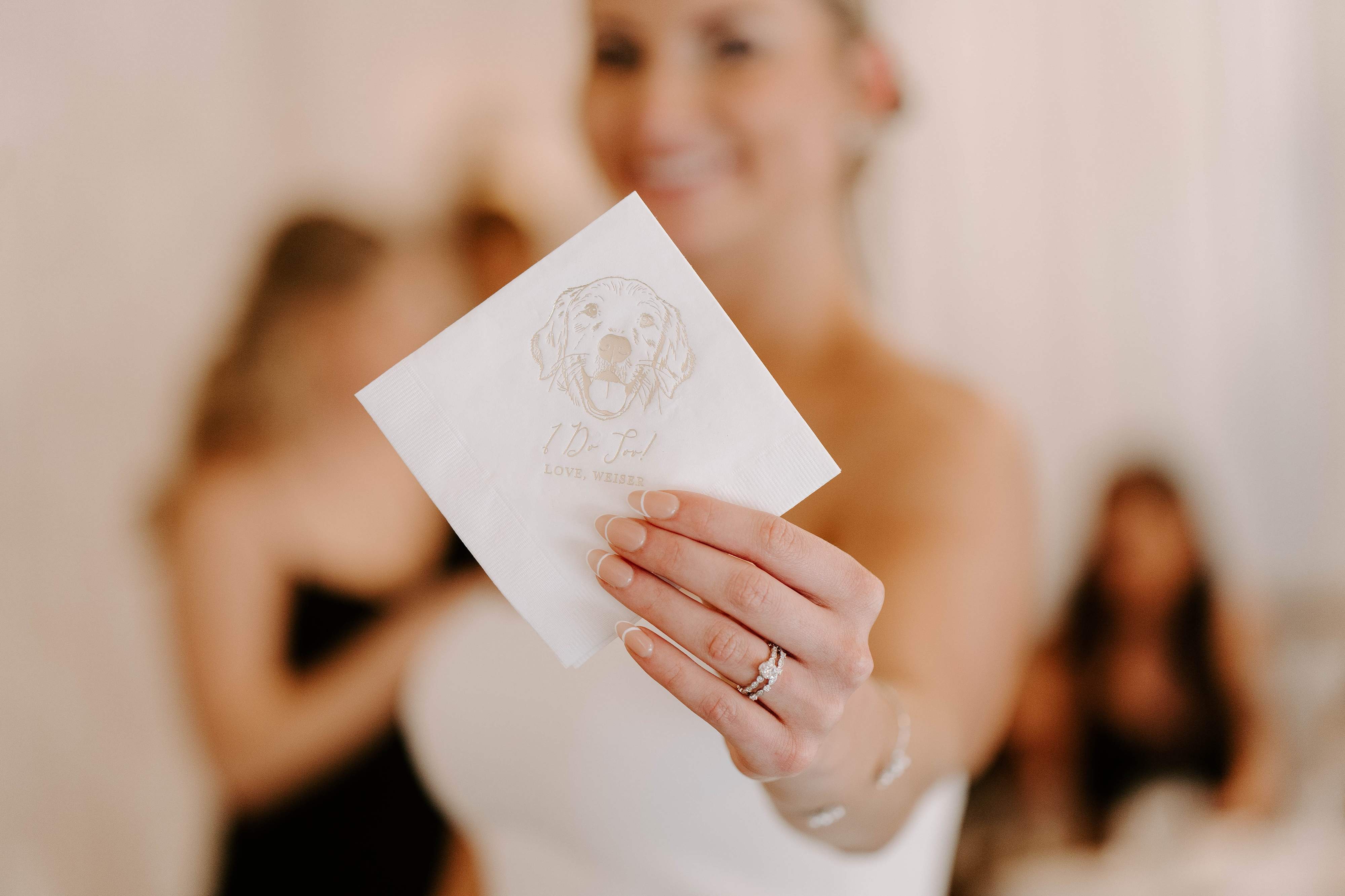
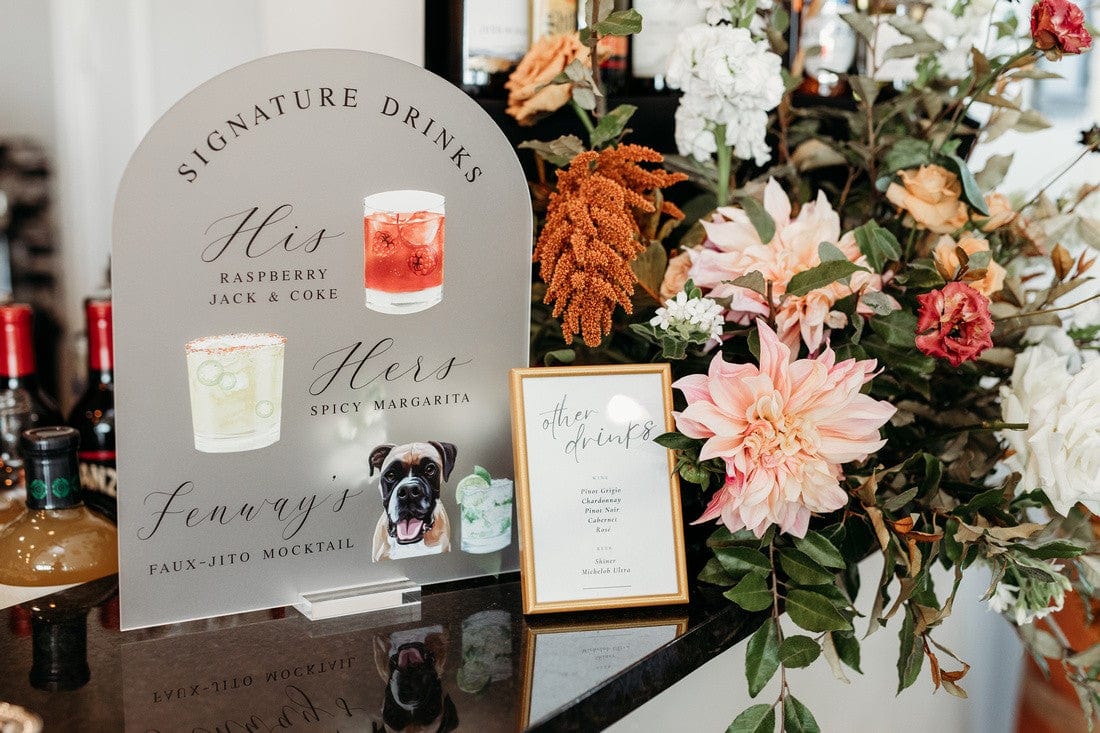
- Pets — illustrated dog napkins are especially popular for couples who want their furry friends included
Rubi and Lib’s illustrated dog napkins have become a favorite among couples who want their pet’s likeness captured in a sweet, stylized way — perfect for place settings and bar areas.
Color, Contrast, and Ink Choices
Readability matters. High-contrast combinations (dark ink on light napkin or vice versa) ensure the design shows up at a glance. Consider:
- Metallic inks (gold, rose gold, silver) for upscale elegance
- Full-color digital printing for watercolor or photographic looks
- Single-color screen printing for bold, budget-friendly designs
Typefaces and Readability
Script fonts can feel romantic but risk legibility in small sizes. Many designers recommend pairing a script for initials with a clean sans-serif for names and dates. Test designs at the actual napkin size before finalizing.
Printing Methods Explained
Different printing techniques produce different looks and price points. Understanding the methods helps couples pick the right trade-off between aesthetics and budget.
Digital Printing
What it is: Full-color, photo-quality printing using digital presses.
Best for: Complex illustrations, watercolor effects, photography, and small print runs. Usually affordable for full-color designs but costs rise with higher-quality papers.
Screen Printing
What it is: Ink pushed through a stencil screen onto the napkin.
Best for: Bold, single-color or limited-color designs. Durable and cost-effective for larger runs, but each color adds to setup costs.
Letterpress
What it is: A relief printing technique that presses inked type or plates into paper, leaving an impression.
Best for: Luxury invitations and napkins with a tactile, debossed feel. Works best on thicker paper, and often costs more.
Foil Stamping
What it is: A metallic foil applied with heat to create shiny accents.
Best for: Elegant monograms and small accents. Adds glamour but increases cost and may have minimum runs.
Embroidery and Heat Transfer (for Cloth)
Cloth napkins offer options like embroidery (classic and durable) or heat transfer printing (great for detailed images but less traditional). Embroidery sizes and stitch types affect price.
Designing for Different Wedding Styles
Personalized napkin designs should reflect the wedding’s overall aesthetic. Here are practical ideas for common wedding styles:
- Rustic Barn: Kraft or natural napkins, hand-drawn wildflower wreath, brown ink, simple serif fonts.
- Beach or Tropical: Watercolor palms in teal and coral, playful sans-serif for names, cocktail napkin stack at the bar.
- Modern Minimal: Bold initials in a geometric sans-serif, black ink on white, clean edges and no additional ornamentation.
- Vintage Glam: Foil-stamped script, ivory paper, small art deco border.
- Pet-Friendly / Quirky: Illustrated dog or cat portrait napkins, perhaps placed at a “pet table” or at the guestbook station.
Practical Considerations: Quantity, Budget, and Timing
How Many Napkins to Order
- Start with the guest count for seating: one dinner napkin per seated guest.
- Order extra for cocktail hours — typically 2–3 cocktail napkins per guest if hors d’oeuvres are heavy.
- Add 10–20% over the expected guest count to cover mishaps and keepsakes.
- For cocktail napkins at bars, order a supply based on estimated drinks served. A common rule is 1–2 napkins per drink served if no plates will be used.
Budget Ranges
Prices vary widely based on material and printing method. These are approximate ranges to help planning:
- Custom paper cocktail napkins: $0.40–$3.00 each (depends on full color, foil, or specialty inks)
- Custom paper dinner napkins: $0.30–$1.50 each
- Cloth napkins with monogram/embroidery: $4–$20 each
- Letterpress or foil-stamped napkins: typically on the higher end due to setup and materials
Small brands and specialty designers, like Rubi and Lib, often offer curated options balancing design and cost — for instance, illustrated dog napkins that feel custom without a sky-high price tag.
Lead Times and Deadlines
Custom printing requires planning. Typical lead times are:
- Digital printing: 1–3 weeks after design approval
- Screen printing: 2–4 weeks (longer if multiple colors)
- Letterpress/foil: 4–8 weeks depending on complexity and schedule
- Embroidery: 3–6 weeks depending on stitch counts and batch size
During peak wedding seasons or holidays, couples should add 2–4 extra weeks. Placing orders at least 6–8 weeks before the wedding gives safe buffer time.
DIY vs Professional Printing: Which Route Should Couples Take?
Both paths have perks. The decision usually comes down to time, design complexity, and how many napkins are needed.
DIY Options
- Home inkjet or craft printers — workable for small, low-cost parties and simple designs.
- Stamps and stencils — charming for rustic or farm weddings; best on plain napkins like kraft paper.
- Heat transfer for cloth using at-home presses — possible but requires practice for clean results.
DIY works when the design is simple, quantities are small, and the couple enjoys hands-on crafting. But for polished, consistent results at scale, professional printing is usually better.
Professional Printing Benefits
- Consistent quality across thousands of napkins
- Access to premium inks (metallics, white ink on dark paper) and specialty techniques (letterpress, foil)
- Design assistance and mockups to preview how artwork will look at actual scale
Many couples choose a hybrid approach: professional printing for the main napkins and DIY napkin wraps or rings to add a handmade element.
Creative Ways to Incorporate Personalized Napkins into the Wedding
Personalized napkins can show up in many places throughout the celebration. Here are ideas that elevate their presence beyond the table:
- Welcome Table: Place napkins in a neat stack next to the guestbook or welcome sign with a note encouraging guests to take one as a keepsake.
- Bar Stations: Personalized cocktail napkins at the bar are practical and offer a branding moment guests will notice often.
- Dessert Table: Coordinate napkins with dessert labels and cake toppers for a cohesive dessert vignette.
- Photo Booth Props: Use napkins with an inside joke or a hashtag to encourage social sharing and create a fun photo prop.
- Favors: Wrap small favors in custom napkins or tie them to napkin rings as part of place settings.
- Welcome Bags: Include a cocktail napkin with a custom illustration in welcome bags for out-of-town guests.
Packaging, Presentation, and Napkin Folding
How napkins are presented can be as impactful as the design itself.
Napkin Wraps and Belly Bands
Belly bands printed with a complementary graphic or printed kraft paper bands give an upscale look without changing the napkin design. They’re great for single-use paper napkins.
Napkin Rings
Custom napkin rings — engraved wood, acrylic, or metallic rings — add texture and can coordinate with other table elements. Napkin rings are especially well-suited to cloth napkins.
Folding and Placement
Simple folds work best when the design sits in the middle of the napkin. For napkins with corner designs, consider placing the napkin folded diagonally or using an asymmetric fold to show the artwork.
Tips for Working with a Designer or Vendor
Clear communication ensures the finished napkins match expectations. Couples should:
- Provide reference images, color swatches (Pantone if available), and font preferences.
- Ask for a scaled mockup or proof at actual napkin size to confirm legibility.
- Confirm ink compatibility with chosen napkin color and material.
- Understand minimum order quantities and returns or defect policies.
- Ask about production and shipping timelines, and build in extra time for corrections.
Brands that specialize in wedding decor, like Rubi and Lib, typically offer design consultations and mockups, which can be a major advantage for couples who want a seamless, coordinated aesthetic.
Sustainability Considerations
Eco-conscious couples can still personalize napkins while minimizing waste. Options include:
- Recycled paper napkins printed with soy or water-based inks
- Unbleached or natural fiber napkins that use less chemical processing
- Reusable cloth napkins that guests can take home as favors
- Biodegradable packaging for napkin stacks and hotel welcome bags
Ask vendors about their environmental policies and available eco-friendly materials; sustainability is increasingly standard among boutique wedding suppliers.
Real Examples and Use Cases
Examples help couples visualize possibilities. A few real scenarios illustrate how personalized napkins play out:
Example 1: Intimate Vineyard Wedding
The couple chose cream 6.5" paper napkins with a deep forest-green two-color screen print: a delicate vine illustration around a script monogram. Napkin stacks at each table matched the menus and were wrapped with a thin jute belly band. Guests kept several napkins as mementos, and the couple used the same vine illustration on their favor tags.
Example 2: Downtown Loft Cocktail Hour
For the cocktail reception, the couple ordered 5" black cocktail napkins with foil-stamped initials in metallic copper. The napkins were placed by the bar and near passed appetizers, elevating the urban, chic vibe. They took a modest budget but had a big visual payoff.
Example 3: Dog-Loving Couple (Rubi and Lib Inspiration)
A couple who included their two rescue dogs in the engagement shoot wanted them featured in a subtle way. They worked with a designer to create small illustrated dog portraits printed on 5" cocktail napkins. Napkins were stacked at the guestbook table and the bar, sparking conversations and photo moments. This approach is exactly the kind of thoughtful personalization Rubi and Lib specializes in with their illustrated dog napkin designs.
"Guests loved the little dog portraits — people kept asking who drew them. It felt like our pups were present without needing to actually bring them!" — A recent bride
Care, Storage, and Post-Wedding Use
How napkins are cared for depends on material:
- Paper napkins: Keep in dry conditions and in original packaging. Avoid stacking heavy items on top during transport.
- Cloth napkins: Wash according to fabric instructions. Pre-test heat settings for embroidered napkins and avoid harsh bleach that may fade color.
- Keepsakes: Store cloth or specialty napkins flat or neatly folded in acid-free tissue to prevent creasing. Display cloth napkins in shadow boxes or use them as table linens at home to remember the day.
Ordering Checklist: How to Get Started
- Choose the napkin type (cocktail, guest, dinner, cloth).
- Decide on the design: monogram, illustration, names, or date.
- Pick the printing method that matches the look and budget (digital, screen, foil).
- Request a mockup at actual napkin scale and test for legibility.
- Confirm quantities, lead time, and shipping details.
- Order a small sample or sample pack if available.
- Place final order with adequate lead time, adding 10–20% extra napkins for contingencies.
Cost-Saving Tips
- Use a single-color design to reduce setup costs for screen printing.
- Order higher quantities if prices drop per unit — sometimes adding a few dozen cuts a nicer price.
- Opt for digital printing for complex designs but smaller runs.
- Bundle napkins with other stationery orders to negotiate better shipping or discounts.
Conclusion
A personalized wedding napkin is a small detail with outsized impact. It offers couples a subtle way to weave personality into their tablescapes, create useful keepsakes, and elevate everyday hospitality into a memorable expression of who they are. Whether the couple chooses an elegantly monogrammed cloth napkin for a formal dinner, a stack of foil-stamped cocktail napkins for a city celebration, or an illustrated dog napkin that nods to a beloved pet, the right design adds warmth and cohesion to the event.
Brands that focus on wedding personalization, like Rubi and Lib, make it easier to blend creativity and quality — especially for couples who want distinctive motifs like custom pet illustrations. With a little planning around type, printing method, quantity, and lead time, a personalized napkin can become one of the tiny, enduring details guests talk about long after the last dance.
Frequently Asked Questions
How far in advance should a couple order personalized wedding napkins?
For typical custom orders, plan for at least 4–6 weeks after design approval. Complex techniques (letterpress, foil) or peak-season weddings may need 6–8 weeks plus shipping time. Ordering a sample early helps prevent last-minute surprises.
Are cloth napkins worth the extra cost?
Cloth napkins cost more but often become cherished keepsakes. They look and feel more luxurious, photograph beautifully, and can be used repeatedly after the wedding. For couples prioritizing sustainability or a higher-end table experience, cloth is usually worth it.
Can a full-color photograph be printed on napkins?
Yes — digital printing supports full-color images on paper napkins. However, photographic detail may be lost on textured or very thin napkin stocks, so choose smooth paper and ask for a sample proof.
What’s the difference between foil stamping and metallic ink?
Foil stamping applies a thin sheet of metallic foil to the surface, creating a reflective, shiny finish. Metallic ink gives a metallic look but lacks the same mirror-like sheen and tactile feel. Foil tends to look more luxe; metallic ink is typically more budget-friendly.
Can pet illustrations really be captured well on napkins?
Absolutely. Stylized or simplified illustrations of pets translate beautifully to napkins, especially when working with a designer experienced in small-scale printing. Brands like Rubi and Lib specialize in illustrated dog napkins and can provide charming, recognizable portraits that read well at napkin size.

Written by Bethany Wysolmerski